
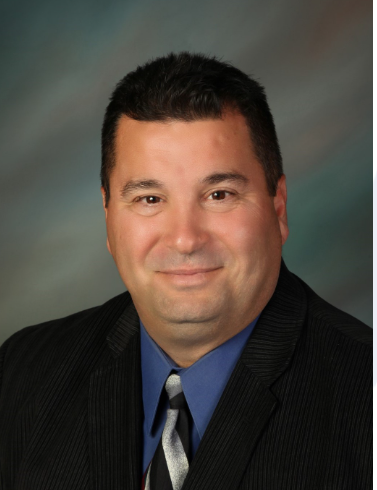
To most people in town, Mike Judge needs no introduction. Less widely appreciated is how deep his roots in Simi Valley run.
His family arrived around 1959, he said, a decade before the city was incorporated. By his estimate, about 15,000 people lived in Simi Valley then. Subdivisions were only beginning to rise, and part of the valley was still known as Santa Susana. Today the city is home to about 125,000 people.
Now the hometown council member is preparing to lead the city. He passed up re-election to his District 2 council seat to run for mayor. In a five-candidate field, he holds about 41 percent of the vote, according to the county’s unofficial count as of Nov. 12. That places him more than 3,100 votes ahead of his nearest rival, the school board trustee Kareem Jubran, and well ahead of the incumbent, Mayor Dee Dee Cavanaugh, who is running third. The results will not be final until the county certifies them, which it must do by Dec. 3.
Many in Simi Valley had been concerned that Mr. Judge and Ms. Cavanaugh, both Republicans, would split the vote, opening the door for Mr. Jubran, a Democrat, to win the mayor’s race. But the county’s semifinal returns show that Mr. Jubran failed to convince enough voters he was the right man for Simi Valley.
The Ledger sat down with Mayor-elect Mike Judge on Nov. 13 and came away from the interview confident that Simi Valley has a bright future. Mr. Judge is poised to set a standard that will ensure a safe and prosperous community for current and future generations of Simi Valley residents.
When The Ledger asked how he felt about election results that pointed toward a win, Mr. Judge said, “It feels great.” He added: “I mean, this is my hometown. I’ve always wanted to just make sure this place is taken care of.”
Mr. Judge, 63, has called Simi Valley home since infancy. An Army veteran, he spent three decades with the Los Angeles Police Department, most of them in the northwest San Fernando Valley. He said he watched that area “go downhill” from what he regards as mismanagement, and he is determined to keep Simi Valley from the same fate.
First elected to the council in November 2010, he has since served as mayor pro tem five times. He attributes his victory in this race to an early start and hard work.
He expects to take office in December for a two-year term, and he plans, in his words, to “hit the ground running.”
His agenda rests on a handful of priorities:
-
Streamline City Hall so that Simi Valley ranks among the fastest cities in the county for opening a business.
-
Revitalize the Simi Valley Town Center, potentially anchored by a hockey arena and complemented by a hotel and for-sale homes.
-
Expand the police force in tandem with the city’s growth, and strengthen its presence on school campuses.
-
Hold the line against any increase in the city sales tax.
A Faster City Hall, a Livelier Town Center
Mr. Judge’s first priority is to turn City Hall, which he sees as an obstacle to commerce, into something closer to a partner. “We’ve got to stop making it a hassle for people that want to open businesses in the city,” he said.
He described a pattern he hopes to break: An entrepreneur leases a building and begins tearing out walls without first consulting the city, a misstep that, in his words, “opens up a whole can of worms.” His remedy is earlier engagement: City staff members would meet new owners before work begins and explain what is required of them and where there is room for flexibility.
“I want to be one of the fastest cities in the entire county to open a new business,” he said.
His most ambitious proposal concerns the Simi Valley Town Center, the open-air mall off the 118 Freeway that, in his estimation, has “got to be livened up.”
The timing may prove opportune. In June, the city announced that the United States Hockey League had named Simi Valley one of six West Coast markets for a new junior hockey franchise, with a launch targeted by the 2027-28 season. The proposal calls for an arena that could also host concerts and community events, though the city said at the time that no site had been selected.
Mr. Judge would like to see that arena rise at the Town Center. The mall’s owners are developing a plan of their own, he said, and the city is seeking to partner with them. “We have that hockey team coming, and we’re going to need space for an arena,” he said. Should the mall prove unworkable, he added, the city has other locations in mind.
He envisions adaptation rather than wholesale demolition. “We can use some of the bones that are there,” he said. The plan he described would preserve the area around the movie theater, relocate restaurants closer to a new arena, place a small hotel on the front parking lot and complete the site with homes for sale. “It could be a really nice part of the city,” he said.
A project of that scale would bring traffic with it. The city will approve only what its roads can handle, Mr. Judge said. “They’ll do the traffic studies, they’ll make sure that the traffic can flow,” he said of the city’s engineers.
Nor did he promise swift results, saying that city staff members have been at work on the Town Center for five years. “Sometimes there’ll be two steps forward, one step back,” he said.
Apartments He Tolerates, Homes He Welcomes
On housing, Mr. Judge is a pragmatist rather than an enthusiast, a man who makes no secret of his distaste for apartment complexes yet acknowledges that Simi Valley needs them.
“We do need them,” he said. “I know people hate them, and I don’t like them either.”
He spoke approvingly, however, of a complex on the former Doctors Hospital property on Heywood Street. He recalled voting for it, a rarity for him where apartments are concerned. “That one on Heywood was a good design,” he said. “It’s going to be well built.”
He credited the developer with working with the city. “So they’ll have plenty of parking,” he said.
Parking is a particular sore point for him, because some apartment buildings, he said, can now be built with almost none. “They expect people to park on the streets,” he said. “And I’m like, no, that’s not the way it works.”
He reserves his greatest enthusiasm for homes that residents can own. When he met with The Ledger, he had just come from an opening event at a new community of three-story townhomes. By his account, they will sell for about $640,000 to $720,000, with 10 one-bedroom units priced under $500,000. The builder, City Ventures, lists homes there from $709,990.
“That’s very affordable in California,” he said, adding that for-sale homes also help the city with its housing numbers.
More Officers on the Streets and in Schools
For a man who spent three decades as a police officer, public safety is less a policy position than a personal conviction. Mr. Judge recalls walking through neighborhoods at 4 a.m. before work and passing garage doors that had stood open all night. He wants Simi Valley to remain that kind of place.
“That’s another one of my priorities, to make sure the city maintains its safety,” he said.
Property crime, he said, is the city’s most pressing safety concern, while violent crime remains rare.
His plan calls for the police force to expand in step with the city. “I would like to get more cops on the job right now,” he said, adding that the growth will come as new homes fill and generate additional property tax revenue.
Recruitment, by his account, is going well, with about 20 candidates in the department’s hiring pipeline and about six in the police academy. He also anticipates that experienced officers will transfer from the Los Angeles Police Department next year, since they “don’t make that much more money than our cops.” He added, “This is a police-friendly town, for sure.”
He had praise for Police Chief Steve Shorts, who rose through the department’s ranks. “I think he’s done a great job,” Mr. Judge said, adding that whenever the city next needs a chief, he wants it to hire from within the department if it can.
He also wants a larger police presence on school campuses. The city lost two school resource officers last year, he said, and while the two now on the job are “solid,” the Police Department believes the schools need at least four.
Mr. Judge sits on a working group with the school district, and he wants the district to share the expense of two additional officers, a cost he put at about $400,000. The group has met only once. “So far there hasn’t been a lot of constructive conversation about that,” he said. “I’ll leave it at that.” Even so, he said, the two sides will keep talking, and another meeting is expected soon.
He takes evident pride in the department’s training, particularly its police range, which doubles as a training center. It was built, he said, on land that Waste Management provided to the city. “State of the art,” he said. “It’s a great place.”
No to a Sales Tax, Doubts About a School Bond
If Mr. Judge is expansive on development, he is unyielding on one point: He opposes any increase in the city sales tax.
The idea surfaced at a City Council meeting in May, when City Manager Samantha Argabrite said she had spoken with the superintendent of Simi Valley Unified about the cost of school safety. The district, she said, had discussed a voter-approved sales tax increase to help pay for it, including the police officers assigned to campuses as school resource officers.
Asked about that idea, Mr. Judge was emphatic. “Absolutely not,” he said. “I would not want to put that burden on the citizens for a thing like salaries.”
Last year, he said, the city raised every employee’s pay to the median using only its existing revenue, and he sees no reason that cannot continue. In any case, he observed, the council cannot raise the sales tax on its own; voters would have to approve it. He has told the city’s employee unions that they are free to pursue a ballot measure of their own.
He is also wary of taxes compounding. Ventura County has tried for years to pass a “self-help” sales tax, he said, only to see voters reject it every time. By his arithmetic, a county tax and a city tax together would lift the local rate from 7.25 percent to 9.25 percent, a prospect he dismissed. “I don’t think so,” he said.
The same reasoning informs his view of the school district’s plans. Simi Valley Unified has discussed a new bond measure. The council has no authority over it, but residents put the question to Mr. Judge all the same.
His position is that the district must first demonstrate the need. With enrollment declining, asking voters for more money is “kind of counterintuitive to me,” he said. “I can’t support it unless I know exactly what they want to use the money for.” The district’s last bond, the $239 million Measure X that voters approved in 2016, “was probably important,” he said, but it placed “a lot of burden on homeowners.”
He was careful to say that the district is not to blame for the decline in enrollment. “It’s just the fault of — nobody’s having kids anymore,” he said. “People that are having kids can’t afford to live here.”
Still, he had counsel to offer. The district should “tighten the belt,” he said, adding that it is fond of promoting administrators, who earn considerably more than teachers. Then he proposed something bolder: Determine “where your lowest schools are,” reassign the students, close one campus and sell it. “That property is worth gold,” he said.
A developer could build teacher housing on the land, he said, and a typical elementary school campus might hold nearly 500 townhomes. “And then they’d have housing for their teachers,” he said. In his view, that would be preferable to asking voters to approve a bond.
Looking Back at the Library and Ahead to 2028
Mr. Judge’s aversion to wasted public money is long-standing, and he offers the library as evidence. “I don’t like spending money or wasting money,” he said.
Early in his council tenure, when Ventura County still operated the Simi Valley library, he sat on the library board. The city, he recalled, scarcely figured in the county’s meetings. “They weren’t even talking about Simi Valley,” he said. So the city left the county system and, in 2013, made the library its own.
Now the city is completing that work. The county still owns the library property, while the county’s animal shelter stands on city land. To untangle the arrangement, the City Council voted unanimously in October to exchange the two properties, a swap expected to save the city about $80,000 a year in lease payments. County supervisors were scheduled to take it up on Nov. 17. Mr. Judge said the city is also replacing the library’s roof and plans to renovate the interior.
Asked what his legacy will be when his term ends in 2028, Mr. Judge pointed to 16 years of work alongside his council colleagues. In that time, he said, Simi Valley has become “a much better place to live,” particularly for those who own or operate a business. “Even though it is irritating for some people, it’s a lot better than it was back in 2010,” he said.
He was candid, too, about the limits of the office: No City Council member, he said, can bring down home prices. “That’s all market-driven.”
Will he seek another term in 2028?
“We’ll see how it goes,” he said.
The Ledger’s View
Whatever he decides about 2028, Mr. Judge will take office as a man with a plan and the heart to see it through. He understands the community’s history because it is his family’s history, too. When he speaks of Simi Valley, he sounds less like a politician describing a city than like a neighbor describing his home.
That devotion is what stayed with The Ledger long after the interview ended. Simi Valley is fortunate to have a leader who has given a lifetime to public service, in uniform and on the council, and who wants, above all, to see the city prosperous and safe. His hometown could hardly ask for a more devoted steward.